
My uncle Ray has run the same dunk tank at our church fair for eleven years, and every single year he gripes about the same busted valve that sprays water on his shoes instead of the target. I bring this up because a coworker asked me last week, half joking, whether stuff like church fairs would even exist in ten years, now that everybody’s staring at a screen instead of the person next to them in line. I laughed it off. Then I kept thinking about it on the drive home, which is usually a sign a question is better than it sounded.
Here is what I keep noticing, and it runs against the doom-and-gloom version of this story that gets repeated a lot: local traditions aren’t fading. Farmers markets near me have longer lines than they did ten years back. Folk festivals sell out faster. My cousins still argue about the same dominoes rules every Thanksgiving; somebody just films it for the group chat now instead of nobody filming it at all. Something is clearly still working here, and I don’t think it’s nostalgia doing all the heavy lifting.
Why the Same Fifteen People at Bingo Night Actually Matter
You don’t build a community by living near people. You build it by doing the same boring thing with them, on a schedule, over and over, until it stops being boring.
That’s basically what a tradition is. A weekly bingo night, a monthly potluck, a card game at somebody’s kitchen table on a Sunday: none of it is glamorous, and that’s kind of the point. Predictability is the whole engine. You show up because you already know your neighbor will be there too, and eventually that turns into something a lot sturdier than a wave across the driveway.
Take Walt. Retired electrician, moved onto our street about three years ago, didn’t know a single soul. He started coming to the block’s monthly potluck mostly because his daughter guilted him into it, from what I understand. Now he’s the guy who plows everybody’s driveway before sunrise after a snowstorm, no questions asked, no committee ever organized that. It just grew out of a couple dozen shared dinners.
Kids pick this stuff up too, whether anyone’s teaching them on purpose or not. A kid who’s gone to the same Fourth of July parade every summer since they could walk knows things a search engine can’t hand them: who used to run the hardware store on Main, why the fire department does the pancake breakfast every year, which family has judged the pie contest since 1987 and refuses to give it up.
The Money Side Nobody Really Budgets For
Local festivals do actual economic work, and I think reporters usually undersell this part. Craft vendors, food trucks, a couple small breweries pouring something seasonal, the one motel two towns over that suddenly fills up for the weekend. All of it leans on these events happening reliably, year after year, like clockwork, nobody’s winding.
But honestly, the money isn’t what sticks with me. It’s the kind of conversation these events produce, which has basically gone extinct everywhere else. Nobody’s scrolling a phone while they wait fifteen minutes for kettle corn. You end up talking to whoever’s standing next to you because there’s genuinely nothing else to do with your hands. I watched a retired schoolteacher get pulled into an hour-long conversation with some college kid, purely because it turned out they’d both grown up going to the same county fair thirty years apart. You don’t stumble into that in a comment section. It just doesn’t happen that way online.
There’s also something strange festivals do to time. A regional cheese festival I went to a couple years back had maybe four hundred people lined up for a tasting tent before ten in the morning, and I’d bet half of them weren’t even really there for the cheese. They were there because their parents used to bring them, and their parents’ parents before that. The cheese is almost incidental.
Card Tables, Dominoes, and Why My Cousins Still Fight About Rules
Full disclosure, I’m biased on this one. I grew up playing a regional trick-taking card game that nobody has ever managed to digitize properly. Every app version dies within a year because it plays clunky and nobody bothers updating it. Fine by me, honestly. Something goes missing when you pull the actual shuffle, the actual side eye across the table, out of a card game and shove it behind a screen.
Old-fashioned games make you sit with the person across from you. You learn to read a face instead of a leaderboard, which is a different muscle entirely. Domino nights, mahjong tables, whatever regional board game your family’s passed down for three generations, they survive because they’re built around a slower kind of attention that a phone doesn’t know how to reward.
This isn’t a war between analog and digital, though, no matter how it sometimes gets framed. Plenty of families run both without thinking twice about it. Tuesday night might be a co-op game on somebody’s phone, Sunday afternoon is the same card game their grandparents played, and neither one cancels out the other. What’s actually changed is how younger players stumble onto the old game in the first place. Usually it’s a video somebody shared, or a forum thread, or a cousin posting about a family tournament that got a little too competitive.
Phones Didn’t Kill This, They Just Changed the Delivery Method
I used to assume every screen was working against local culture. I was wrong about that, or at least wrong more often than I was right.
Small cultural groups that used to rely on a bulletin board outside a grocery store now run a Facebook group with two thousand members in it. I talked to a folklorist a few years back who was digitizing oral histories from farmers in her county, uploading interviews so grandkids scattered across three states could hear their great-uncle describe some planting technique nobody uses anymore. That project doesn’t happen without a laptop and a cheap microphone. It might not happen at all otherwise.
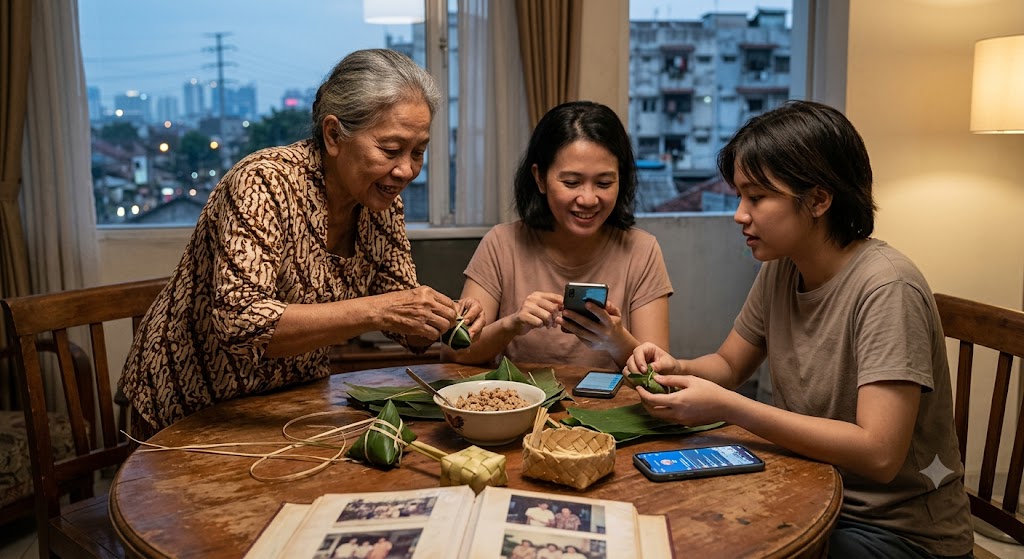
Messaging apps coordinate volunteer shifts for festival setup faster than any phone tree ever managed to. Families who’ve scattered across countries use video calls so a niece can watch her grandmother walk through a recipe in real time, even when the grandmother can’t travel anymore to teach it in person. The tradition isn’t being replaced by any of this. It’s just reaching further than it used to.
What I’ve noticed, watching a handful of community groups up close, is that the ones doing this well treat their online presence like scaffolding, not like the building itself. The group chat gets people through the door. What happens once everyone’s actually in the room is still the whole point of showing up.
Teaching a Kid Something They Didn’t Ask to Learn
Handing a tradition down to a teenager looks nothing like it did thirty years ago, and pretending otherwise doesn’t do anybody any favors.
A fifteen-year-old today is more likely to find a regional folk instrument through a random short video than through a relative sitting them down for a lesson on a Saturday afternoon. A recipe that used to travel by way of a handwritten index card now travels through a phone camera aimed at a stovetop. The knowledge hasn’t stopped moving. It’s just running through a different pipe than the one your grandmother used.
A few local historical societies I’ve visited have gotten smarter about this. They run little oral history booths at their annual events now, recording thirty-second clips from older attendees and posting them online afterward for anyone to stumble across. Small gesture, honestly, but it means a kid who wasn’t paying attention in the moment can find it two years later on their own and end up caring about it anyway.
I don’t think it matters much whether a kid learns a dance from their grandmother directly or from a video of their grandmother. What matters is whether they bother learning it at all, and whether they ever get around to teaching it to somebody younger than themselves.
My Best Guess at Where This Goes
I don’t buy that heritage and technology were ever as opposed as people like to frame it. The communities doing well right now treat digital tools like plumbing, not like furniture. The tools move information from one place to another. The tradition still has to actually happen somewhere, in a room, at a table, in a church parking lot that smells like fried dough and spilled soda.
My guess, for what it’s worth, is that festivals and card games and neighborhood rituals get more valuable, not less, the more of daily life slides onto a screen. Scarcity does that to things. Whatever a phone genuinely can’t replicate ends up being exactly what people want.
Walt still plows my driveway every winter, unasked. Ray’s dunk tank still sprays water on his shoes instead of hitting the target, and he still complains about it, and somebody still laughs at him for not fixing it after eleven years. Somewhere in between the phone and the funnel cake, the tradition just keeps doing what it’s always done, which is give people an actual reason to show up.